
 1
water
1
water
Park
Central Park
What people say
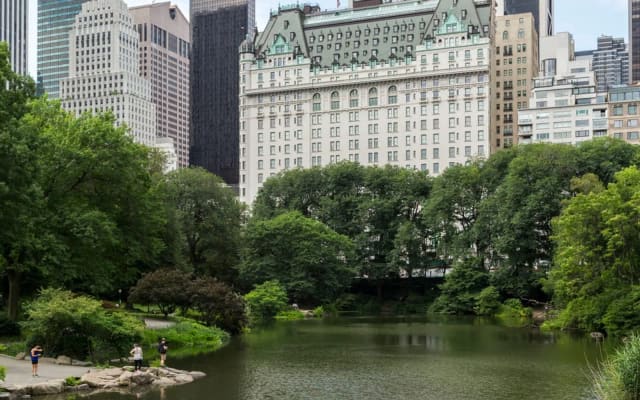
Central Park is New York City's 843-acre flagship landscape, stretching from 59th to 110th Street with dozens of entrances, playgrounds, lawns, woodlands, lakes, gardens, sports facilities, visitor centers, restrooms, accessible routes, public art, and separately operated attractions.
At this place
Upcoming events
Inside this place
Explore the grounds
Choose a destination, preview what it looks like, then open Explorer for live on-site guidance.
1
water
 2
nature
2
nature
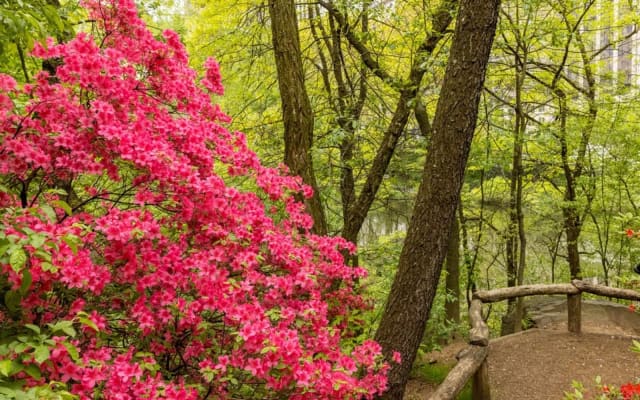
Hallett Nature Sanctuary
A restored four-acre woodland and rocky overlook above the Pond with winding paths, native habitat, and a quieter experience just inside the southeast corner.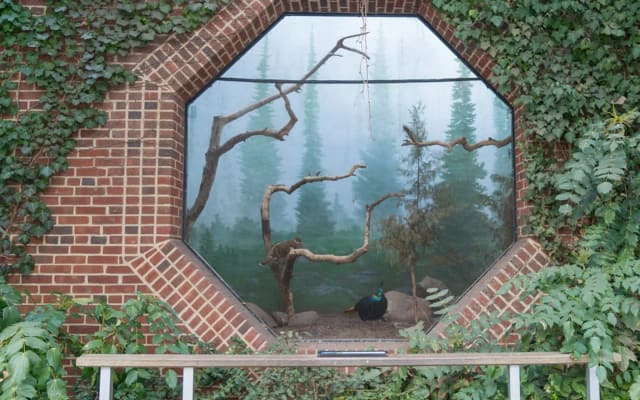 3
museum
3
museum
Central Park Zoo & Tisch Children's Zoo
A separately ticketed Wildlife Conservation Society zoo with tropical, temperate, and polar habitats; admission includes the Tisch Children's Zoo.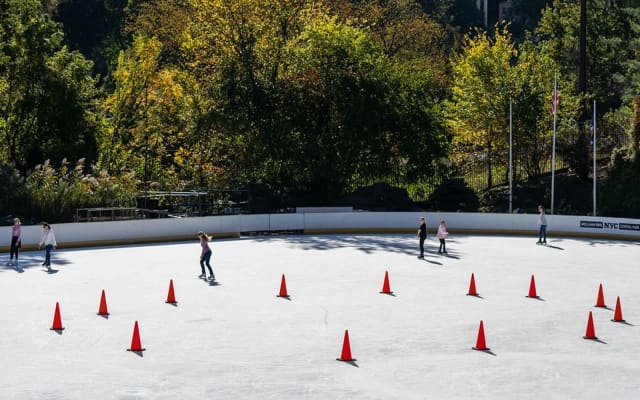 4
recreation
4
recreation
Wollman Rink
The seasonal rink below the south-end skyline operates as an ice-skating destination in colder months and hosts separate warm-season programming.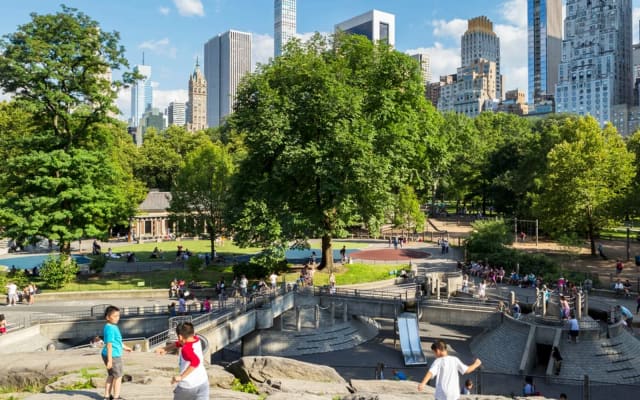 5
playground
5
playground
Heckscher Playground & Ballfields
Central Park's largest playground combines climbers, swings, slides, rock outcrops, sand, seasonal water play, and adjacent ballfields near the southwest corner.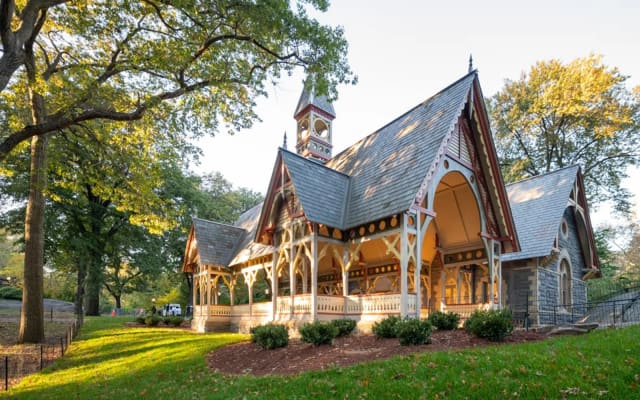 6
visitor_center
6
visitor_center
The Dairy & Central Park Carousel
The historic Dairy visitor center provides maps, staff guidance, and gifts near the separately operated Central Park Carousel and Chess & Checkers House.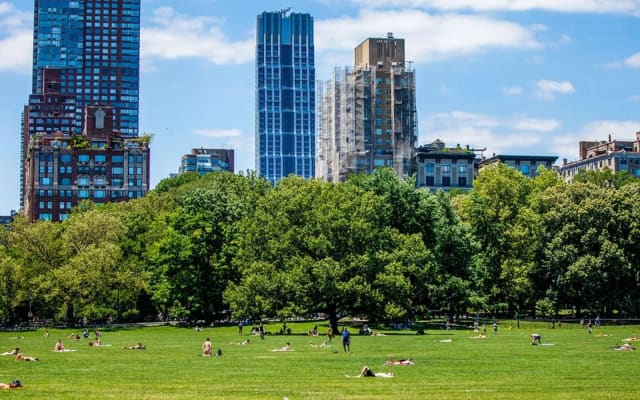 7
lawn
7
lawn
Sheep Meadow & Tavern on the Green
A 15-acre sunbathing and picnic lawn near the southwest side, with skyline views and Tavern on the Green immediately west of the meadow.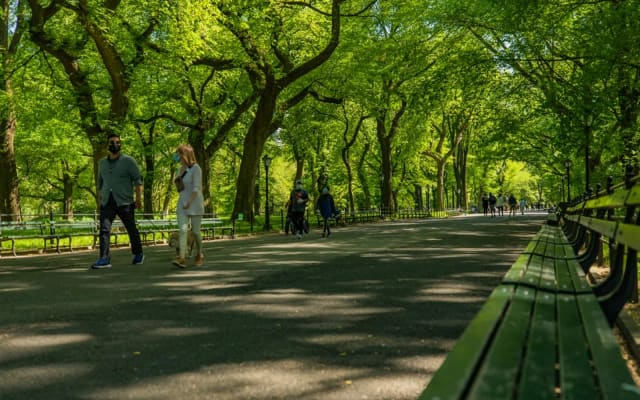 8
landmark
8
landmark
The Mall & Literary Walk
The park's broad elm-lined promenade leads from Literary Walk and its statues toward Bethesda Terrace, with the Naumburg Bandshell along the east edge.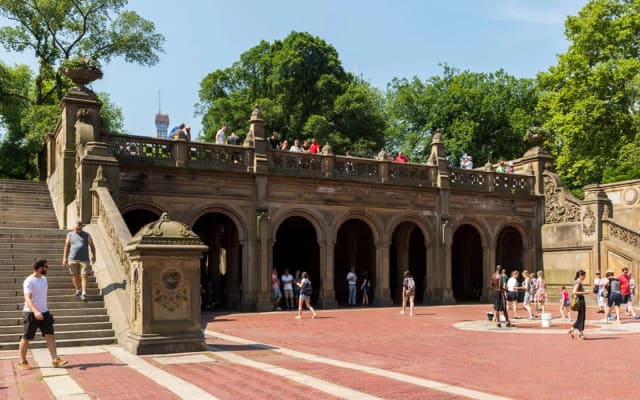 9
landmark
9
landmark
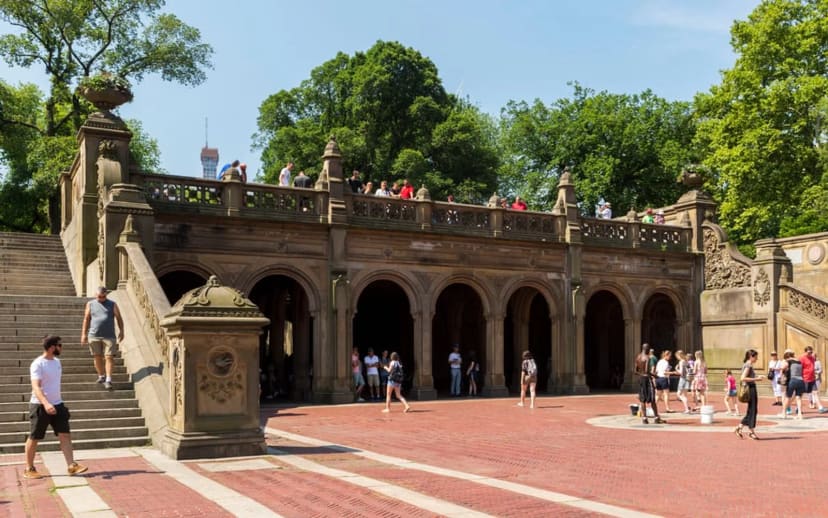
Bethesda Terrace & Fountain
Central Park's architectural heart combines two terrace levels, the tiled Arcade, Bethesda Fountain, Lake overlook, musicians, and direct connections to the Mall and Ramble.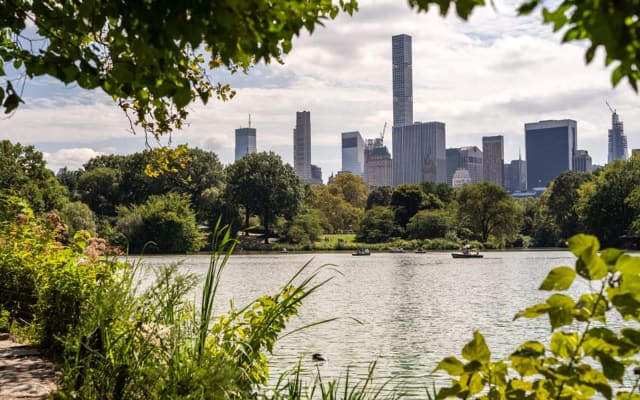 10
water
10
water
The Lake, Bow Bridge & Loeb Boathouse
The Lake links rowboat views, Bow Bridge, the Ramble shoreline, Cherry Hill, and the Loeb Boathouse dining and boating area in Central Park's busiest scenic cluster.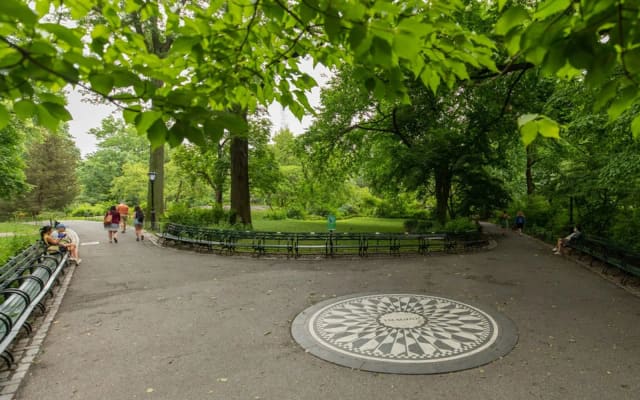 11
memorial
11
memorial
Strawberry Fields & Imagine Mosaic
The living memorial to John Lennon centers on the Imagine mosaic in a designated quiet landscape just inside the west side near West 72nd Street.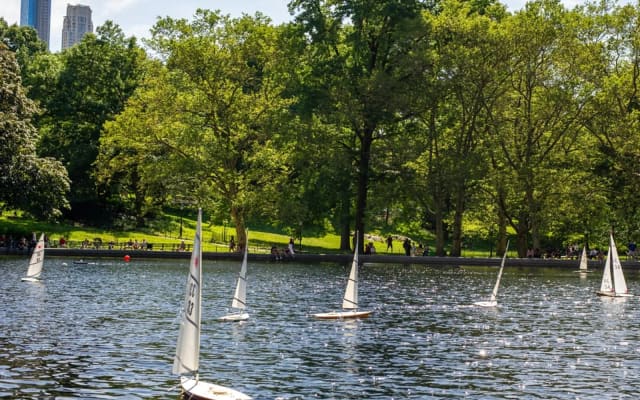 12
family
12
family
Conservatory Water & Alice in Wonderland
The model-boat pond is ringed by benches and family landmarks including Alice in Wonderland and Hans Christian Andersen, with Kerbs Boathouse on the east shore.Public record
Verified information
What people ask
Useful answers about this place
15 answers
Frequently requested details, researched and kept current by AuditMap.
Which Central Park entrance should I use?
Choose the entrance nearest your destination: 59th Street for the Pond and Heckscher area, 72nd Street for Bethesda Terrace and Strawberry Fields, 79th Street for Belvedere and the Ramble, or the north end for Harlem Meer and the Davis Center. Do not route to the park center.
Is there parking inside Central Park?
No public visitor parking is available inside Central Park. Use a nearby commercial garage, legal street parking, subway, or bus, and select an arrival point near the exact destination because the park is more than 50 blocks long.
What hours is Central Park open?
Central Park is open from 6 a.m. to 1 a.m. every day of the year. Individual visitor centers, restrooms, gardens, playgrounds, attractions, fields, and concessions close earlier and may be seasonal.
Where are public restrooms in Central Park?
Restrooms are distributed across the park, and some close in winter or follow facility hours. Use the Conservancy restroom guide or accessibility map for the closest open option; Heckscher Playground's accessible restroom is normally open 6:30 a.m.-9 p.m. year-round.
How accessible is Central Park?
The park has mapped barrier-free routes, accessible entrances, restrooms, playground features, and visitor facilities, but historic arches, rock outcrops, bridle paths, woodlands, and slopes vary greatly. Use the official accessibility map for a destination-specific route.
Which Central Park playground should families visit?
Central Park has 21 playgrounds. Heckscher Playground near West 61st-63rd is the largest and includes an accessible surface, adaptive swings, water spray, and nearby accessible restrooms; choose another playground when it is closer to your planned landscape.
When can dogs be off leash in Central Park?
Dogs must be leashed from 9 a.m.-9 p.m. Off-leash use is allowed from 6-9 a.m. and 9 p.m.-1 a.m. only in designated areas. Playgrounds, ballfields, water bodies, Sheep Meadow, the Great Lawn Oval, and several sensitive landscapes remain off limits.
Where can I check Central Park closures?
Use the Conservancy's live alerts page before a feature-specific visit. Lawns, ballfields, playground sections, restrooms, water activities, roads, and attractions may close for weather, restoration, algae, maintenance, or events.
Where can I find shade in Central Park on a hot day?
The Conservancy recommends the tree-lined borders of the Great Lawn and Sheep Meadow and the area around Harlem Meer; Arthur Ross Pinetum and the park's wooded landscapes also provide substantial canopy. Shade moves during the day, and visitor centers are not emergency cooling centers. On extreme-heat or thunderstorm days, follow City guidance and move to an air-conditioned building outside the park.
What are Central Park's walking surfaces and slopes like?
Central Park mixes smooth paved drives and walks with crushed-gravel running track, soft dirt bridle path, woodland trails, rock outcrops, stairs, bridges, and both gentle and steep grades. The six-mile paved Drive is the most continuous hard-surface route but is shared with runners, cyclists, skaters, and authorized traffic. The Conservancy accessibility map identifies stable accessible trails, curb cuts, stairs, and slope severity; use it for a wheelchair or stroller route because scenic shortcuts through the Ramble, North Woods, and rocky landscapes can be uneven or inaccessible.
Where are the best picnic areas in Central Park?
The Conservancy recommends Great Hill, East Meadow, Sheep Meadow, Great Lawn, Arthur Ross Pinetum, and the Harlem Meer area, with picnic tables or nearby restrooms varying by location. Casual small picnics do not need a reservation, but a birthday, field day, game, or other organized activity with 20 or more people requires an NYC Parks special-event permit. Barbecuing is allowed only on specifically announced holidays and never in playgrounds, athletic fields, woodlands, fenced landscapes, or directly under trees.
Where can children use splash pads or swim in Central Park?
Most of Central Park's 21 playgrounds have seasonal water features; the only playground the Conservancy identifies without one is Pinetum Playground. Strong choices include Heckscher, Bernard Family, Tarr Family, Adventure, and the East 110th Street playground. For swimming, the free seasonal Gottesman Pool at the Davis Center by Harlem Meer is open on its published summer schedule, currently 11 a.m.-7 p.m. with a 3-4 p.m. cleaning break. Never swim in the Lake, Reservoir, Pond, Pool landscape, Harlem Meer, or other park water bodies.
Which subway station should I use for Central Park?
Choose the station for your destination because Central Park is 2.5 miles long. B and C trains serve Central Park West; Columbus Circle at the southwest corner has A, B, C, D, and 1 service; N, R, and W serve the southeast corner; and 2 and 3 trains serve Central Park North. Fifth Avenue buses serve the east edge, the M10 serves the west edge, and crosstown buses cross near major latitude points. Check the Conservancy map first, then plan to the nearest gate.
How should I organize a first visit to Central Park's landmarks?
Choose one latitude cluster. Around 59th-65th Streets, see Grand Army Plaza, Gapstow Bridge, the Zoo, Wollman Rink, Dairy, and Carousel. Around 67th-75th, follow the Mall to Bethesda Terrace and Fountain, then Bow Bridge, Conservatory Water, Alice in Wonderland, and Strawberry Fields. Around 79th-86th, combine Belvedere Castle, Shakespeare Garden, Turtle Pond, the Great Lawn, and the Obelisk. Northern landmarks such as Conservatory Garden, the Blockhouse, Harlem Meer, and the Ravine require a separate visit.
How much does Central Park cost?
General park, paths, lawns, playgrounds, landscapes, and most public landmarks are free. The zoo, carousel, skating, rentals, performances, food, and some programs charge separately.
Quick community check
Help verify this place
Know this place? Check one detail from a recent visit.
✓ Accurate × Incorrect ? Unsure
Community for this place
What people are noticing
Ask a question, share what changed, or help make a detail more reliable.
The place logUseful questions, updates, and confirmations from this community.
Keep exploring
Nearby public places
Based on this place's location and public details, not your activity.